AI adoption is a change-management problem
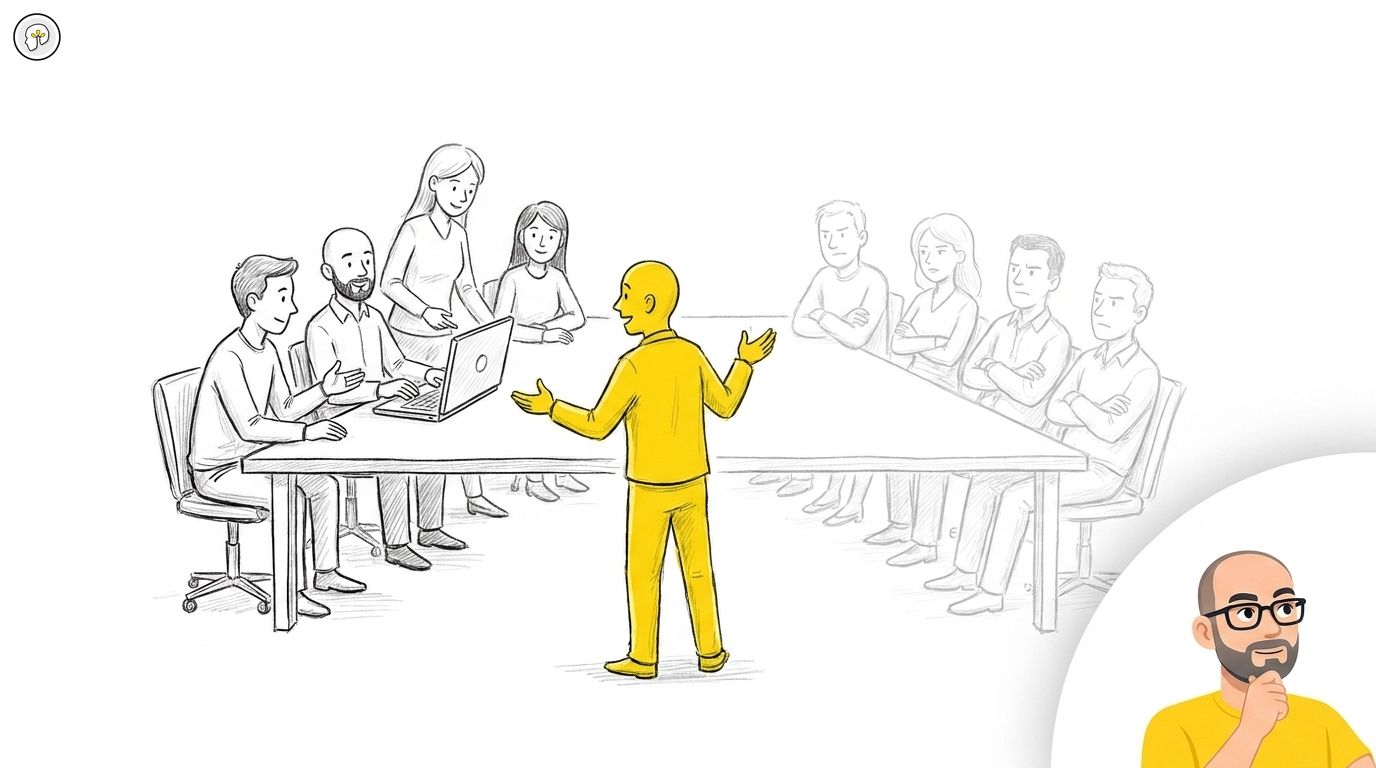
There is a pattern you can set your watch by. An organisation decides to get serious about AI. It buys licences, runs an introduction, hands the tools out. A few weeks later, roughly half the team has woven the tools into how they work. The other half has quietly gone back to how they did things before.
The standard response is to reach for a better tool. A new model dropped last night, surely that's the unlock. It rarely is. The half that stalled did not stall because the tool was too weak. They stalled because nothing told them why this was worth changing for.
The blocker was never capability
When you look closely at the half that adopted and the half that didn't, the dividing line is almost never technical skill. It's whether the person found a reason that was theirs. A developer who sees the tool close the gap between what they understand and what they have to ship adopts it. A developer who is simply told to use it, with no change to what success looks like for them, does not.
That is not a technology gap. It is the oldest problem in organisational life: people change how they work when the change makes sense from where they sit, and not before. You cannot install that with a licence. You have to lead it.
Which means it lands in a discipline that already exists
Here is the part most of the AI conversation misses. If adoption is fundamentally about behaviour, reasons, and the quiet fears underneath them, then the work is change management. And change management is not new. There are firms, teams, and people who have done nothing else for decades. Reading where an organisation resists. Finding the individual why. Moving a group from compliance to ownership. Surfacing the things nobody says in the meeting, the fear about job security, the worry that faster means less to bill.
Those firms tend to watch the AI wave from the sidelines, assuming it belongs to the technologists. It does not. The hardest part of AI adoption is the part they are already expert in.
What they are missing is one layer, not the whole stack
So why hasn't this already happened? Because the change-management discipline has a gap of its own, and it is exactly the inverse of the technologists' gap.
A pure technology shop can run the tools but cannot move an organisation. A pure change shop can move an organisation but cannot credibly stand in front of a development team and show the work, in production, with their own name on it. Talking about AI is not the same as shipping with it. A team can tell the difference in the first ten minutes.
What a change-management firm is missing is therefore narrow and specific: the AI-as-a-competence layer, and the production credibility to back it. Not a new identity. One layer added to a discipline they already own.
The defensible position in 2026
Put the two together and you get something neither side has alone. The behaviour-change expertise that makes adoption actually stick, plus the hands-on, in-production credibility that earns the room's trust in the first place.
That combination is hard to copy. A technology vendor can add slides about change but cannot fake decades of organisational practice. A traditional consultancy can add AI vocabulary but cannot fake having shipped. The firms that win the next few years of AI adoption will be the ones who already understood that this was a leadership and behaviour problem, and who added the one missing layer rather than starting from scratch.
It was never a technology question. It was a question of who is positioned to answer it.