The AI consistency illusion
One of the most dangerous myths about AI is that it behaves like traditional software. Business leaders, developers, analysts, document professionals — across every role I train — I see the same pattern: people assume that giving AI the same input will produce the same output. This assumption leads to costly failures regardless of where in the organization AI is being used.
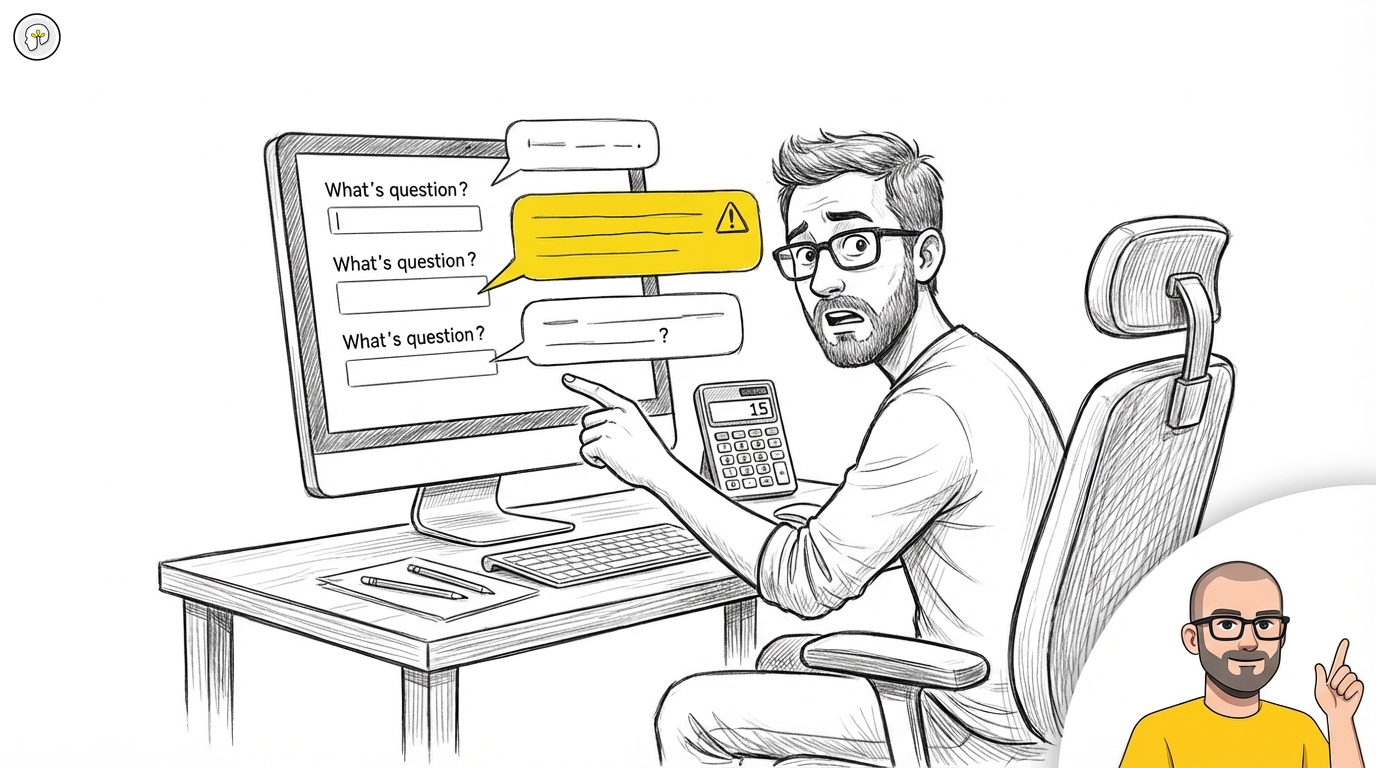
"Is AI consistent - uh no! If I send in the same question 3 times - do I get the same answer - uh.. no!"
The consistency trap I see everywhere
Here's what I keep running into across AI implementations: teams use AI to generate code, then treat it like magic. They deploy without understanding, debug without context, and blame the AI when things break.
But AI doesn't take responsibility. AI doesn't get fired when systems fail. You do.
The inconsistency isn't a bug that will be fixed in the next version. It's fundamental to how these systems work. Large language models are designed for creativity and variation, not deterministic precision. They use randomness to prevent robotic responses, which means the same prompt can produce different outputs depending on the model's internal state.
And let me be clear about what this means: AI cannot give you repeatable results the way a database query or a calculation can. If you need deterministic output, AI is the wrong tool. Full stop.
"In the 1980s they said 'garbage in, garbage out' - is it different with AI? ... uh no!"
The garbage-in-garbage-out principle has evolved into something more dangerous. Traditional systems gave predictable errors that you could debug systematically. AI systems generate plausible but potentially incorrect answers that can fool even experienced professionals. I've seen it happen to smart people who should know better - including myself.
What this means for production systems
If you're building AI systems, you'll discover that consistency expectations don't scale. What works reliably for small, controlled experiments often falls apart when deployed across larger, more complex business processes.
In automated customer service, identical inquiries may receive different quality responses. For content generation, the same brief can produce varying levels of accuracy. In data processing workflows, identical datasets may yield different insights.
"AI today still makes many mistakes and works best in small projects"
The validation crisis hits because traditional quality control assumes predictable behavior. When AI produces different outputs for identical inputs, standard testing approaches become inadequate. You need entirely new frameworks for ensuring reliability - and most teams don't have them yet.
How I manage inconsistency
I've learned to acknowledge inconsistency upfront and design systems to handle it. This means building in confidence scoring that helps prioritize human validation efforts, multiple validation layers with different expertise requirements, fallback mechanisms for when AI outputs are unreliable, and continuous monitoring to identify when performance degrades.
The most effective approach I've found treats AI as a powerful but unreliable assistant rather than a replacement for human expertise. This means designing workflows where human oversight is efficient rather than burdensome, building systems that gracefully handle AI failures, and setting realistic expectations about what AI can actually deliver consistently.
Expert validation becomes essential, not optional. You need domain knowledge to spot plausible but incorrect outputs, technical understanding to recognize when AI has misinterpreted requirements, and business context to evaluate whether recommendations make sense.
The business reality
Understanding AI inconsistency changes how you should approach AI adoption. Rather than expecting immediate productivity gains from replacing people, I recommend focusing on augmentation scenarios where human expertise guides and validates AI outputs.
Yes, validation takes time. But the consequences without it are severe. Production failures that take days to fix. Data corruption that destroys user trust. Security breaches that cost millions. Projects abandoned because they're unreliable.
The teams that succeed with AI are those that embrace its inconsistency as a design constraint rather than fighting against it. They build systems that harness AI's creative potential while maintaining the reliability their work requires.
Breaking the consistency illusion
"There are no shortcuts there" applies directly to consistency expectations. You cannot shortcut the work of understanding AI limitations, building appropriate validation systems, and maintaining human expertise for oversight.
The teams that learn to work with AI's inconsistency productively will outperform those that waste time trying to eliminate it. This means building systems that work with AI's nature rather than against it, and finding the sweet spot where AI creativity enhances rather than undermines reliability.
Based on 6 months of AI consistency challenges and validation frameworks Published: August 2025