How to build AI systems that actually collaborate
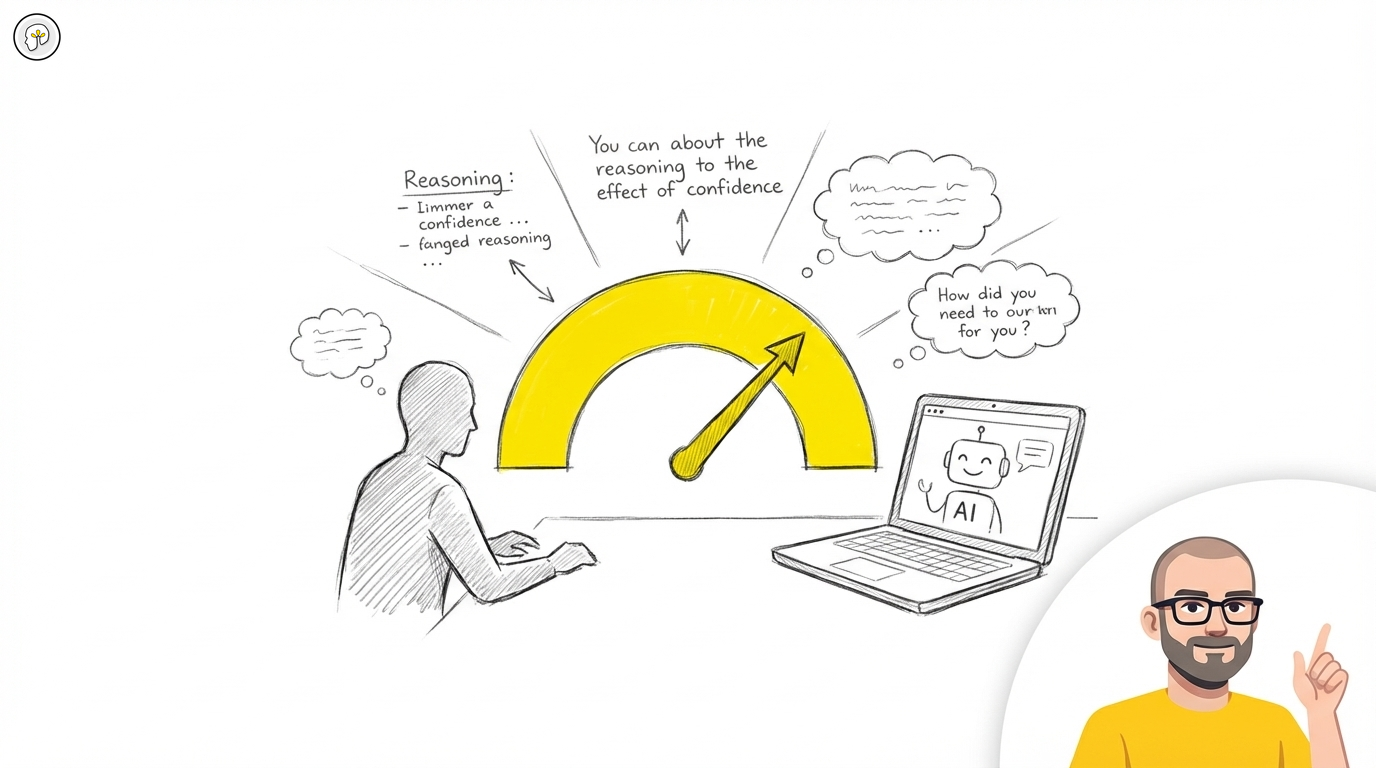
You should have reasoning and you should have a confidence score. This simple requirement transforms AI collaboration. Instead of AI being a black box that spits out mysterious answers, it becomes a transparent partner that helps make smart decisions.
The transparency that makes AI trustworthy
Effective AI systems should never give just an answer. They should provide what they're proposing, why they think this is right, how confident they are (0-100%), what assumptions they're making, and what could go wrong.
Without this transparency, you're flying blind. With it, informed decisions can be made about when to trust the AI and when to dig deeper.
Confidence-based workflow
Effective systems use confidence levels to guide decision-making:
90-100% confidence: Quick review, usually good to go
70-89% confidence: Detailed check, look for specific issues
50-69% confidence: Major collaboration needed, significant changes likely
Below 50%: Human-driven solution, use AI for research only
This framework enables moving fast on solid recommendations while being careful with uncertain ones.
The learning loop that improves everything
Here's the pattern that works: 1. AI suggests with reasoning and confidence 2. Humans validate and give feedback on what was right/wrong 3. AI learns from corrections 4. Future suggestions get better
This isn't just validation overhead - it's an investment. Every correction makes the AI more useful next time. AI systems get dramatically better over months of this feedback.
Team roles that actually work
Traditional development teams don't work well with AI. Effective AI implementations require:
AI Orchestrators: Design the prompts and workflows
Validation Specialists: Review AI outputs with domain expertise
Integration Engineers: Connect AI and human processes smoothly
Quality Assurance: Test the whole human-AI system
Different skills than traditional roles, but essential for AI success.
Industry patterns I've observed
Successful AI implementations consistently follow similar patterns:
Healthcare: AI suggests, doctors decide, everything has reasoning Finance: AI flags, humans investigate, multiple review layers Development: AI generates, humans validate, clear approval gates
The common thread: AI provides analysis, humans make decisions, transparency enables trust.
Workflow design that doesn't slow you down
The key insight: good human-AI collaboration should speed you up, not slow you down. Effective approaches are simple. AI confidence scores help prioritize attention. High-confidence outputs get quick approval. Low-confidence outputs get focused review. Everything gets logged for learning. Quick rollback if something goes wrong.
When done right, this catches problems early instead of in production.
Quality control that actually works
Three levels of control work effectively:
Process controls: Regular reviews, peer validation, escalation procedures Technical controls: Version control, automated testing, monitoring Organizational controls: Clear roles, training, metrics that reward quality
The goal isn't perfect oversight - it's reliable improvement over time.
The real cost-benefit
Yes, human-AI collaboration takes setup time. But the alternative is problematic. AI systems that nobody trusts. Outputs that look good but fail in practice. Teams that abandon AI because it's unreliable. Massive failures because nobody was checking.
Proper collaboration pays for itself through prevented failures and improved capabilities.
My practical framework
Successful implementations consistently demonstrate these principles:
- Demand transparency from AI - reasoning and confidence always
- Match oversight to confidence - more uncertain = more checking
- Create feedback loops - AI learns from human corrections
- Design for speed - high-confidence outputs move fast
- Measure both speed and quality - optimization for both
The future isn't AI replacing humans. It's AI and humans getting really good at working together.
Each correction makes the AI smarter. Each validation makes humans more effective. That's the learning partnership that actually delivers results.
Based on 6 months of building AI systems that humans actually trust Practical guidelines for AI-human collaboration
Strategic AI insights for business leaders and technical decision makers Published: August 2025