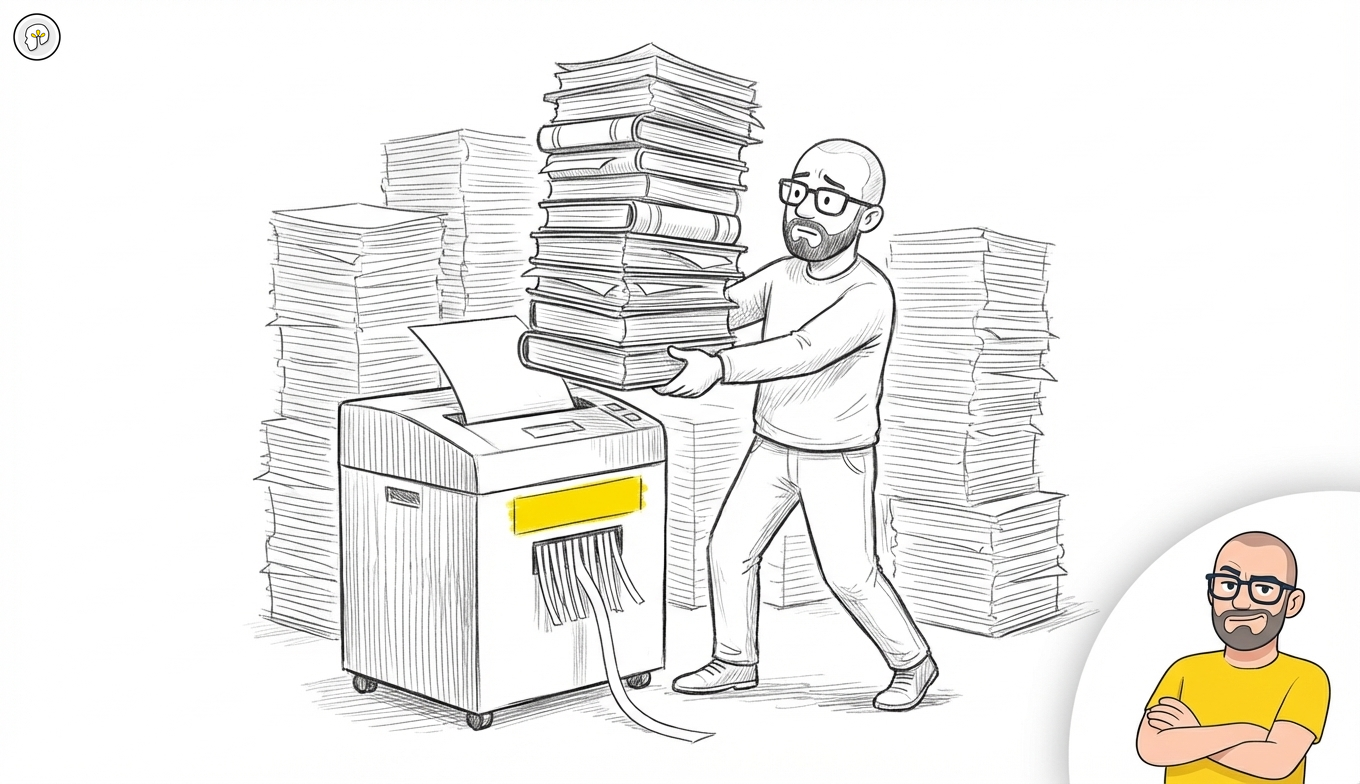
The context window illusion
AI marketing focuses on massive input capacity while hiding the real constraint that breaks professional workflows: severely limited output capacity. I've watched teams make adoption decisions based on impressive context window numbers only to discover they can't get the complete outputs their work requires.
"You can feed in as much as you want, but you don't get as much back out"
The marketing deception I keep seeing
Every AI announcement emphasizes input capacity. Claude Sonnet 4.0 promotes 1 million token context windows. Gemini claims 1 million token processing. GPT-5 markets 400,000 token capacity. These numbers sound impressive and suggest AI can handle vast amounts of information to produce equally comprehensive outputs.
But that's the deception. Large input capacity doesn't equal large output capacity. Teams assume they can provide comprehensive context and receive equally comprehensive responses. This assumption leads to disappointment when AI systems provide fragmented, incomplete outputs that require manual assembly.
"Marketing focuses on how much you can stuff in, not on how much you get out"
The fragmentation problem that breaks workflows
Real professional work requires substantial, coherent outputs. Complete code modules need 3,000-8,000 tokens. Business reports require 5,000-15,000 tokens. Technical documentation needs 8,000-25,000 tokens to cover topics thoroughly.
"ChatGPT stops after 2,000-4,000 tokens with 'Continue generating'"
This output limitation transforms seamless content creation into fragmented assembly. You end up managing multiple continuation requests, each introducing inconsistencies in tone, style, or logic. Important details get lost between fragments. Cross-references break. Arguments lose coherence across continuations.
Each continuation operates with reduced context awareness. The AI forgets earlier sections when generating later parts, leading to repetition, contradiction, or logical gaps. Professional documents require consistency that the continuation mechanism undermines.
And here's what nobody tells you: AI can't warn you when it's losing coherence. It will confidently produce the fifth continuation as if it remembers everything from the first - even when it clearly doesn't.
The hidden cost reality
"Costs jump 10-100x from UI testing to API production"
I typically see teams explore AI using free web interfaces that seem promising for simple tasks. When they attempt production workflows requiring substantial outputs, they discover web interfaces can't deliver complete responses. This forces expensive migration to API solutions.
The cost shock occurs because API pricing scales with actual token usage rather than session-based web pricing. Workflows that seemed economical during testing become prohibitively expensive when implemented through APIs charging for full token volume.
My output-first evaluation approach
Understanding output limitations changes how I evaluate AI tools. Rather than being impressed by context window marketing, I test output capabilities under real conditions.
"Choose tools based on output capacity, not context window marketing"
Different systems show significant variation in practical output capacity. ChatGPT's web interface typically stops around 4,000 tokens. Claude can often reach 8,000-10,000 tokens in single responses. Gemini sometimes allows 30,000+ token outputs. GPT-5 promises up to 128,000 output tokens, though real-world performance remains to be tested. These practical limits matter more than theoretical specifications.
I design workflows that account for output limitations rather than fighting them. This means breaking large tasks into appropriately sized segments that individual AI responses can handle completely.
The real value framework
AI excels at tasks where 2,000-8,000 tokens provide complete, actionable outputs. Code functions, brief analyses, summary reports, focused explanations. These tasks leverage AI's strengths without hitting output problems.
AI struggles with tasks requiring extensive coherent outputs like comprehensive documentation, book-length content, or complex multi-part analyses. These tasks either require significant workflow adaptation or may not suit current AI capabilities at all.
Breaking the illusion
"Next time you see AI marketing focused on massive context windows, ask: 'But how much can it actually write?'"
The context window illusion represents a fundamental mismatch between how AI is marketed and how it performs in professional workflows. If you base decisions on input capacity marketing rather than output reality, you're setting yourself up for disappointment and unexpected costs.
Output capacity, not input capacity, determines real-world AI value. The sooner you accept that, the sooner you'll build workflows that actually work.
Based on 6 months of AI output limitations and workflow adaptations Published: August 2025