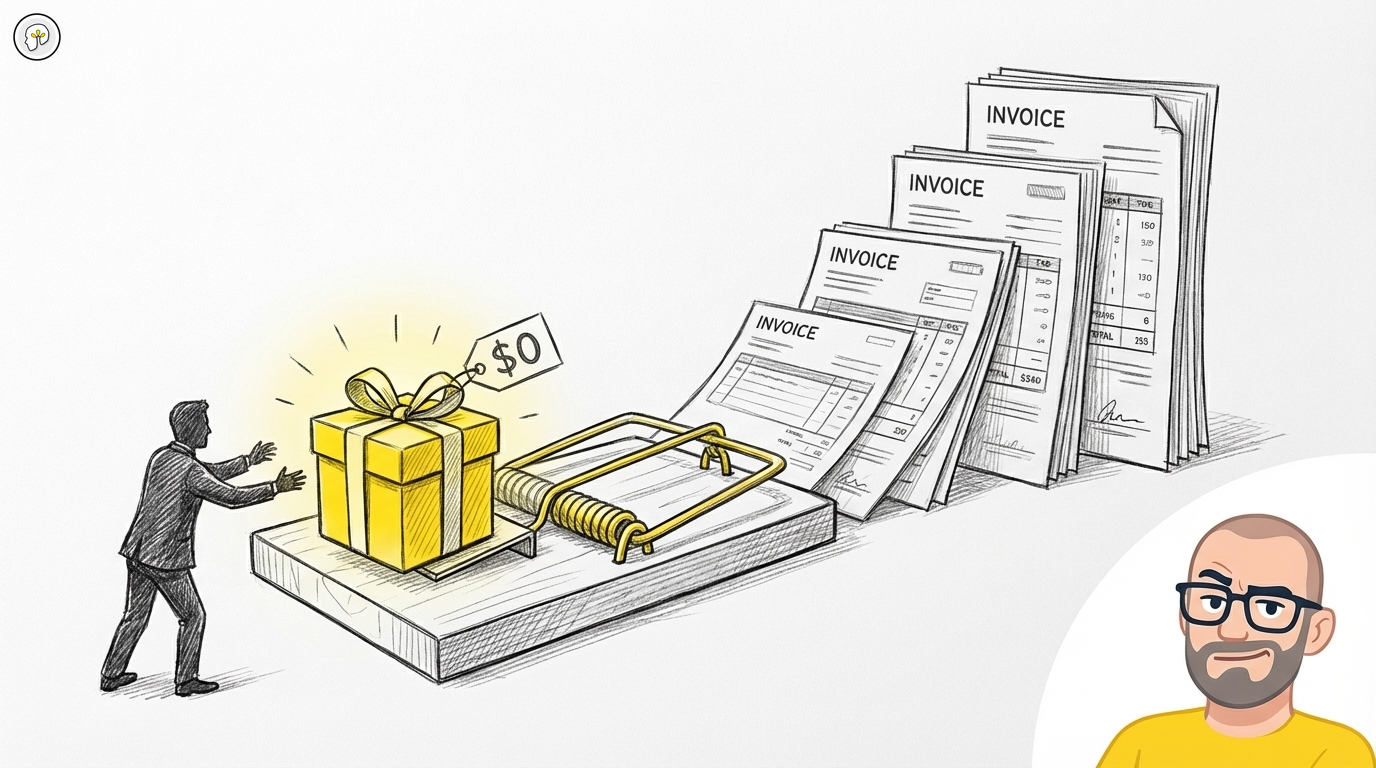
AI-prislögnen: varför gratis är en fälla och 20 dollar i månaden inte räcker
Låt mig vara brutalt ärlig
"Alla vill ha gratis. Och sedan blir de besvikna."
Jag har tappat räkningen på hur många organisationer jag sett följa samma mönster:
- Testar gratis ChatGPT
- Blir entusiastiska över demona
- Försöker använda det i riktigt arbete
- Blir frustrerade av begränsningarna
- Drar slutsatsen att "AI inte fungerar"
Problemet är inte AI. Problemet är att prismodellen är designad för att få dig beroende av något du i praktiken inte kan använda.
Gratistierns fälla
Vad gratis faktiskt ger dig
- ~4 000 tokens kontext (3 A4-sidor)
- Äldre, svagare modellversioner
- Strypta svarstider under rusningstid
- Hastighetsbegränsningar som slår in snabbt
- Din data används för träning
Vad gratis är designat att göra
Få dig att tro att AI är magi — så att du uppgraderar.
Demona fungerar för att de är enkla. Be ChatGPT skriva en dikt? Magi. Be det sammanfatta din 50-sidiga rapport? "Sorry, I can't process files that large."
"Gratis ger gratis resultat."
20-dollars-illusionen
"Uppgradera bara till Plus! Problemet löst!"
Nej. Här är vad 20 dollar i månaden (~220 SEK) faktiskt ger dig:
Vad du vinner
- Tillgång till nyare modeller (GPT-4 m.fl.)
- Större kontextfönster (~32k tokens)
- Prioriterad åtkomst under belastade perioder
- Vissa avancerade funktioner
Vad du fortfarande saknar
- Obegränsad användning (fair use-policyn slår till)
- Professionell kontextnivå (fortfarande begränsad)
- API-åtkomst för integration
- Opt-out från dataträning som standard
- Konsekvent prestanda vid intensiv användning
Det dolda taket
De flesta på 20-dollars-nivån når gränsen redan under sitt första seriösa projekt. Då möts de av: - "You've reached your usage limit. Please wait." - "Switching to a slower model due to high demand." - Kontextfönstret fylls fortfarande upp efter 20–30 utbyten
20-dollars-nivån finns till för att konvertera gratisanvändare — inte för att stödja professionellt arbete.
Kostnadschoppen ingen varnar dig för
Det här ser jag konstant ute i organisationer:
Utvärderingsfasen
"Vi testade ChatGPT och det fungerar utmärkt! Vi driftsätter det för hela teamet."
Kostnad under utvärdering: 0–220 SEK/månad per testare
Verklighetsphase
"Vänta, varför klarar det inte våra dokument? Varför tappar det kontexten? Varför är API-fakturan så hög?"
Faktisk kostnad för professionell användning:
| Användningsfall | Gratis | 20 $/mån | Vad du faktiskt behöver | Verklig kostnad |
|---|---|---|---|---|
| Individuell research | OK | Bättre | Räcker för lätt bruk | 220 SEK/mån |
| Dokumentanalys | Går sönder | Kämpar | 200 $/mån-nivå | 2 200 SEK/mån |
| Teamdriftsättning | Omöjligt | Begränsat | API-åtkomst | 5 000–50 000+ SEK/mån |
| Produktionsintegration | Omöjligt | Omöjligt | API + infrastruktur | 10 000–200 000+ SEK/mån |
Klyftan från "testning" till "produktion" är 10–100 gånger i kostnad. Ingen berättar detta i förväg.
Enterprise-prisfällan
"Skaffa enterprise! Det löser allt!"
Låt mig förklara vad enterprise AI-prissättning verkligen innebär:
Grundkostnaden
- Plattformsavgifter: 5 000–50 000 SEK/månad innan förbrukning
- Licensiering per användare: 200–500 SEK/månad per plats
- Installation och integration: 50 000–500 000 SEK engångskostnad
- Support/SLA: 10–20 % av totalkostnaden per år
Förbrukningskostnaden
- Token-prissättning som skalas med faktisk användning
- Kontextfönsterkostnader som multipliceras med dokumentstorlek
- API-anrop som adderar snabbare än du anar
Vad de inte berättar
Enterprise ger dig samma modeller som finns tillgängliga via API. Du betalar 50 gånger mer för: - En snyggare adminkonsol - Avtalsvillkor istället för klickigenom - Support-SLA - Compliance-kryssrutor
Är det värt 50 gånger kostnaden? För en del organisationer, ja. För de flesta räcker API-åtkomst med ordentliga avtal — till 10 % av kostnaden.
Den verkliga prismatematiken
Så här ser vad AI faktiskt kostar ut på olika skalor:
Individuell yrkesperson (konsult, analytiker)
Minsta fungerande nivå: 220–440 SEK/månad - Claude Pro eller ChatGPT Plus - Fungerar för 80 % av individuella uppgifter - Når gränser på komplexa projekt
Faktiskt bekväm nivå: 2 200+ SEK/månad - Claude Pro + API-krediter för tungt arbete - Eller ChatGPT Pro (200 $/månads-nivå) - Hanterar professionellt dokumentarbete
Litet team (5–10 personer)
Budgetversion: 1 100–2 200 SEK/månad totalt - Delad API-åtkomst - Noggrann användningshantering - Frustrerande för tunga användare
Fungerande version: 10 000–25 000 SEK/månad - Individuella konton för tunga användare - API-pool för programmatisk användning - Buffert för användningstoppar
Organisation (50+ användare)
Försök inte ens genomföra detta med konsumentprenumerationer.
Realistisk kostnad: 50 000–200 000+ SEK/månad - Mix av användarlicenser och API-åtkomst - Ordentliga enterprise-avtal - Integrationsinfrastruktur - Användningsövervakning och optimering
Vad leverantörerna gömmer i finstiltet
"Obegränsat" är det inte
Varje "obegränsad" AI-plan har en fair use-policy. Nå den och du får: - Långsammare modeller - Hastighetsbegränsning - "Please try again later"-meddelanden - Tyst kvalitetsförsämring
Outputgränser finns oavsett input
Du kan betala för kontextfönster på en miljon tokens. Output är ändå begränsad till 4 000–30 000 tokens per svar. Alltid.
Prissättningen förändras utan förvarning
API-kostnader har förändrats flera gånger. Det som kostade X igår kan kosta 2X imorgon. Budgetera därefter.
"Gratis" har ett pris
När produkten är gratis är du produkten. Din data tränar deras modeller. Dina användningsmönster informerar deras prisstrategi.
Hur du faktiskt budgeterar för AI
Steg 1: Definiera vad du faktiskt behöver
Budgetera inte för "AI." Budgetera för specifika utfall: - Dokumentanalys: X dokument per månad - Skrivassistans: X sparade timmar per vecka - Kodgenerering: X funktioner per sprint - Kundsupport: X ärenden per dag
Steg 2: Beräkna realistiska kostnader
| Uppgiftstyp | Kostnad per uppgift | Månadsvolym | Månadskostnad |
|---|---|---|---|
| Enkel fråga/svar | ~0,01 SEK | 1 000 | 10 SEK |
| Dokumentsammanfattning | ~0,50–2 SEK | 100 | 50–200 SEK |
| Lång analys | ~2–10 SEK | 50 | 100–500 SEK |
| Kodgenerering | ~1–5 SEK | 200 | 200–1 000 SEK |
Lägg på 50 % buffert för iteration och fel.
Steg 3: Planera för rätt nivå
| Ditt behov | Minimibudget | Vad du köper |
|---|---|---|
| Utforskning | 0 | Gratisnivåer (acceptera begränsningar) |
| Individuell yrkesperson | 220 SEK/mån | Claude Pro eller liknande |
| Tung individuell användning | 2 200 SEK/mån | Pro-nivåer + API-krediter |
| Teamanvändning | 10 000+ SEK/mån | API-åtkomst + hantering |
| Enterprise | 50 000+ SEK/mån | Ordentligt enterprise-avtal |
Prenumeration vs. API — vad ska du välja?
Prenumerationer (20–200 $/månad per användare)
Bra för: Individuell utforskning, lätt professionell användning Dåligt för: Intensiv användning, integration, teamskalning
API-åtkomst (betala per token)
Bra för: Produktionsanvändning, integration, förutsägbar skalning Dåligt för: Oförutsägbar användning, individuell casual-användning
Hybridansatsen (det som faktiskt fungerar)
- Prenumerationer för utforskning och lätta användare
- API-åtkomst för kraftanvändare och produktion
- Enterprise-avtal för compliance-krav (vid behov)
Låt inte leverantörerna trycka dig mot enterprise när API + ordentliga avtal räcker.
Ditt ansvar
"Det kostar detta mycket. Acceptera det eller gör något annat."
AI är inte gratis. Professionella resultat kräver professionella investeringar. Leverantörerna ljuger inte — de delar bara inte frivilligt med sig av hela bilden.
Vad du måste acceptera: - Gratis är för testning, inte utvärdering - 20 $/månad är ingångsnivå, inte professionell - Produktionsanvändning kostar 10–100 gånger mer än testning - Enterprise-prissättning är ofta 50 gånger API-prissättning
Vad du måste göra: - Budgetera utifrån utfall, inte marknadsföring - Planera för den nivå du faktiskt kommer att behöva - Bygg in buffert för användningstillväxt - Förhandla avtal — klicka inte bara igenom
AI är ett verktyg. Verktyg kostar pengar. Verktyg, inte magi.
Slutsatsen
Nästa gång en leverantör visar dig en demo på sin gratisnivå, fråga:
- Vilken nivå behöver jag för att det ska fungera med mina faktiska dokument?
- Vad är månadskostnaden vid 10 gånger den här användningen?
- Vad händer när jag når fair use-gränsen?
- Vad säger era användarvillkor om dataanvändning?
Kan de inte svara tydligt — gå därifrån och hitta en leverantör som kan.
Se även: Context Window Economics för att förstå de tekniska begränsningarna bakom dessa prisnivåer.
Baserat på 30 års produktionsutveckling och åtskilliga organisationer som bränts av oväntade AI-kostnader Publicerad: december 2025