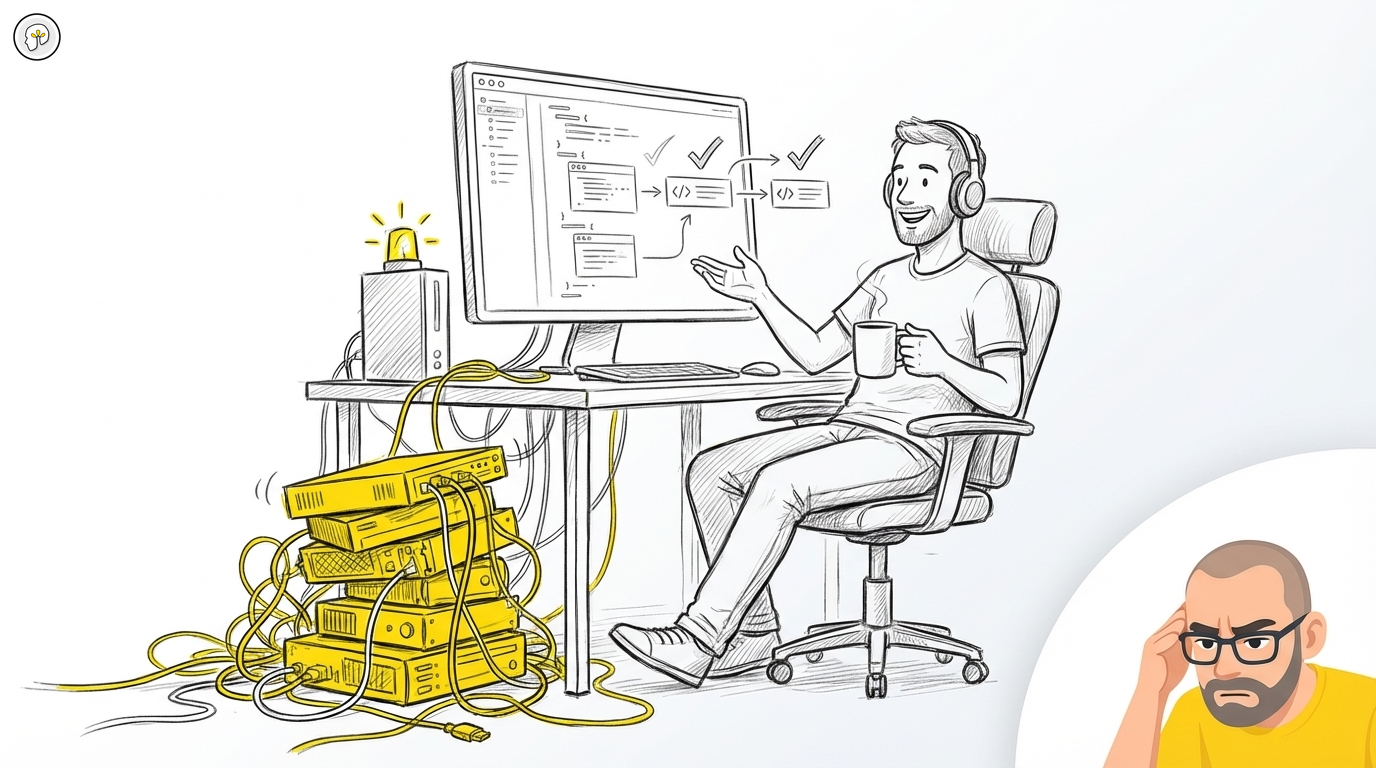
Vibe Coding: The Hidden Danger of AI Development
Target audience: Development teams, tech leads, CTOs
Reading time: 6 minutes
Key insight: Why "it works but I don't know why" is a ticking time bomb
Definition
Vibe coding (n.): Creating code without understanding. Letting AI generate solutions you can't explain, debug, or maintain. Operating on vibes rather than comprehension.
It's the development equivalent of driving blindfolded because the GPS is giving directions.
The Seductive Trap
AI makes vibe coding incredibly tempting:
- Instant gratification: Complex features appear in seconds
- Imposter syndrome relief: "Look what I built!"
- Velocity illusion: Shipping faster than ever
- Complexity abstraction: Don't need to understand the details
One developer admitted: "I built an entire API integration in 10 minutes. It worked perfectly. I had no idea how."
Six weeks later, it broke in production. Debug time: 3 days.
Red Flags You're Vibe Coding
- "It works but I don't know why"
- Copy-pasting AI code without review
- Skipping the planning phase
- Can't explain the code to others
- Afraid to modify AI-generated code
- Debugging means regenerating
- Code reviews become rubber stamps
If you recognize these patterns, you're not alone. Every team using AI faces this challenge.
The Compound Interest of Ignorance
Vibe coding accumulates technical debt at an unprecedented rate:
Week 1: The Honeymoon
- Features ship quickly
- Everyone's impressed
- Productivity metrics soar
Week 4: The Cracks
- First production bug takes hours to fix
- Team members can't modify each other's code
- Documentation is meaningless
Week 8: The Reckoning
- Critical failure in production
- No one understands the codebase
- Refactoring means starting over
- Trust in AI plummets
Week 12: The Aftermath
- Reverting to manual coding
- "AI doesn't work for real projects"
- Valuable tool abandoned due to misuse
Why Vibe Coding Happens
1. Pressure to Deliver
"We need this feature yesterday." AI seems like the shortcut.
2. Overconfidence in AI
"If AI wrote it, it must be right." Famous last words.
3. Skill Gap Masking
Junior developers can generate senior-level code... that they can't maintain.
4. Metrics Misalignment
Measuring lines of code or features shipped rather than maintainability.
The Security Nightmare
Vibe coding's darkest secret: security vulnerabilities you can't see.
Real example from a workshop participant:
# AI-generated authentication
def verify_user(token):
    decoded = jwt.decode(token, options={"verify_signature": False})
    return decoded['user_id']
The developer didn't notice the verify_signature: False. The AI had prioritized "making it work" over security. This code shipped to production.
The Alternative: Conscious AI Development
Principle 1: Personal Responsibility
"Du är personligt ansvarig för all kod" - You are personally responsible for all code you check in.
Principle 2: Explanation Requirement
If you can't explain it to a junior developer, you shouldn't ship it.
Principle 3: Incremental Understanding
Build complex features in understandable increments.
Principle 4: Code Review Discipline
AI-generated code needs MORE review, not less.
Practical Prevention Strategies
1. The Rubber Duck Test
Before committing AI-generated code, explain it to a rubber duck (or colleague). Can't explain it? Don't ship it.
2. The Debug Challenge
Intentionally break the AI-generated code. If you can't fix it without regenerating, you don't understand it.
3. The Teaching Moment
Have team members present AI-generated code in code reviews. Teaching forces understanding.
4. The Context Window Discipline
Smaller, focused prompts lead to understandable code. Massive prompts create incomprehensible systems.
5. The Gradual Adoption
Start with AI-assisted debugging and refactoring before generation. Build understanding gradually.
Success Pattern: The Three-Layer Approach
Teams successfully avoiding vibe coding use this pattern:
- Human designs the architecture
- AI implements the components
- Human validates and understands
This maintains human oversight while leveraging AI efficiency.
Real-World Recovery Story
A fintech startup discovered 40% of their codebase was vibe coded. Their recovery:
- Audit: Identified incomprehensible sections
- Prioritize: Critical paths first
- Rewrite: With understanding, not just regeneration
- Document: As they learned
- Process: New AI guidelines established
Time invested: 3 weeks Bugs prevented: Countless Team confidence: Restored
The Cultural Shift
Preventing vibe coding requires cultural change:
From: "How fast can we ship?"
To: "How well do we understand what we're shipping?"
From: "AI will handle it"
To: "We handle it, AI assists"
From: "Trust the output"
To: "Verify and understand the output"
Your Anti-Vibe Coding Checklist
Before committing ANY AI-generated code:
- [ ] Can I explain every line?
- [ ] Could I debug this without AI?
- [ ] Would I write something similar manually?
- [ ] Have I reviewed for security issues?
- [ ] Can my team maintain this?
- [ ] Is the approach documented?
- [ ] Have I tested edge cases?
The Sustainable Path
AI is incredibly powerful for development, but only when used consciously. The choice is:
Vibe coding: Fast today, disaster tomorrow Conscious coding: Thoughtful today, sustainable forever
Call to Action
- Share this article with your team
- Audit your codebase for vibe-coded sections
- Establish AI guidelines that prevent vibe coding
- Celebrate understanding over velocity
- Remember: You own all code you ship
The Bottom Line
Vibe coding is technical debt at 50% interest. It feels productive but destroys codebases. The antidote isn't avoiding AI - it's using AI consciously.
As one workshop participant concluded: "I thought AI would let me code without thinking. I learned it actually requires thinking MORE, just differently."
That's the paradox and the opportunity.
Based on patterns observed across multiple enterprise AI adoption workshops. For hands-on training in conscious AI development, visit mindtastic.se
Related: "The Context Window Trap" | "Testing AI-Generated Code" | "Personal Responsibility in AI Development"